
The Short Answer
When the power drops, you open and close the garage door by hand using the manual release cord that hangs from the trolley on the opener rail. Pull it to disconnect the door from the opener, then lift or lower the door yourself. Once power is restored, you reconnect the trolley to the opener carriage by pulling the cord again and letting the opener do the rest on the next cycle. That's the whole idea. The details below are what keep you from straining your back, bending a track, or getting hurt doing it.
North County San Diego doesn't lose power often, but when it does, it's usually during a winter rainstorm with wind gusts strong enough to drop a line or trip a transformer. If that happens while you're mid-errand or trying to get the car out before work, knowing this sequence in advance saves a lot of standing in the rain fumbling with a cord you've never pulled.
Tools You Need
- None, technically — but a step stool helps if your release cord is high up or you're not tall enough to reach it comfortably.
- A flashlight or phone light, since outages often mean a dark garage too.
- Work gloves are a good idea if your door is older or you're not sure how heavy it is.
How to Open the Door Manually
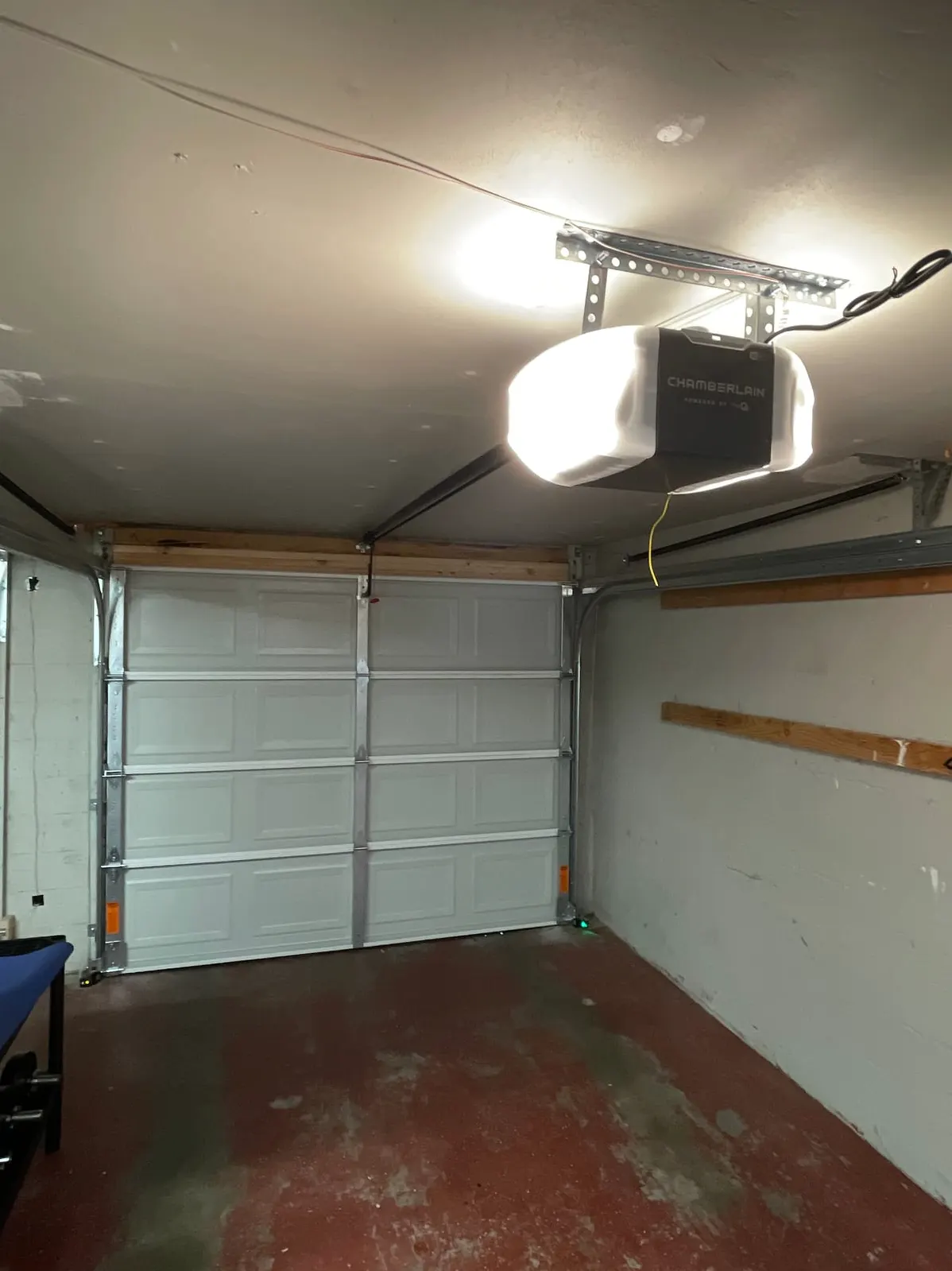
- Locate the manual release cord. It's usually a red handle hanging from a cord attached to the trolley that rides along the opener rail, roughly in the middle of the door.
- Make sure the door is fully closed before you pull it, if possible. Disconnecting the trolley while the door is partway open can cause it to drop unexpectedly.
- Pull the cord down and toward the back of the garage (toward the opener motor). You'll hear or feel a click as the trolley disengages from the carriage.
- Lift the door slowly using the handle, not the panels. A properly balanced door should rise with moderate, even effort and stay open partway on its own.
- If the door feels heavy, jerky, or won't stay up when you let go, stop. That's a spring problem, not a power problem, and manual lifting repeatedly on a bad spring can lead to the door slamming down.
How to Close the Door Manually
- With the trolley already disconnected, guide the door down slowly using the handle.
- Lower it all the way until it's fully seated against the floor, not just resting a few inches up.
- If you have a garage door lock or slide bolt, engage it, especially if the power outage is tied to a storm and you won't be checking on the house for a while.
- Leave the trolley disconnected until power returns. Don't try to force it back onto the opener rail in the dark.
Re-Engaging the Opener After Power Returns
- Make sure the door is fully closed before reconnecting.
- Pull the manual release cord again, this time toward the front of the door, which moves the trolley back into position under the opener carriage.
- Use the wall button or remote to run the opener through one full cycle. You should hear a clunk as the trolley locks back into the carriage, and the door should move normally on the next open and close.
- If the door doesn't reconnect on the first try, run it again. Sometimes the trolley needs the door to travel a few inches before it catches.
- Reset the clock on your wall console and check that any battery backup indicator light is behaving normally, especially if the outage lasted more than a few hours.
What's Fine for a Homeowner to Handle
Pulling the release cord, manually lifting and lowering the door, and reconnecting the trolley once power is back are all normal homeowner tasks. If the door moves smoothly and stays balanced through this process, you're done.
What Needs a Technician
If the door felt unusually heavy, dropped fast, wouldn't hold position, or made a grinding or popping sound while you were lifting it, don't keep operating it manually. That's almost always a spring, cable, or roller issue, not something caused by the outage itself — the power loss just revealed it. Torsion springs in particular are under heavy tension and aren't a DIY repair. Salt air along the coast also speeds up corrosion on release cords, hinges, and cable ends, so a cord that feels stiff or a trolley that won't disengage cleanly is worth a look even outside of an outage.
When to Call Encinitas Garage Door
If your door won't lift evenly, the release mechanism feels stuck, or the opener won't reconnect properly after power is restored, that's a job for a technician rather than more trial and error. Encinitas Garage Door handles garage door repair and spring replacement calls exactly like this, and offers emergency garage door service for situations where the door gets stuck open or closed during a storm and you can't wait for a scheduled appointment.
If this winter's rain and wind have you thinking about your garage door's reliability before the next outage, call Encinitas Garage Door to get it checked out now, while you can still choose the appointment time.