
The mistake almost everyone makes first
One spouse wants to turn the garage into a home gym, office, or workshop. The other asks what happens to the door. The answer that usually wins the argument in the moment is: nothing, we just leave it closed. No contractor, no cost, no demo. It feels like the obvious move, especially if the car already lives in the driveway and the opener never gets used.
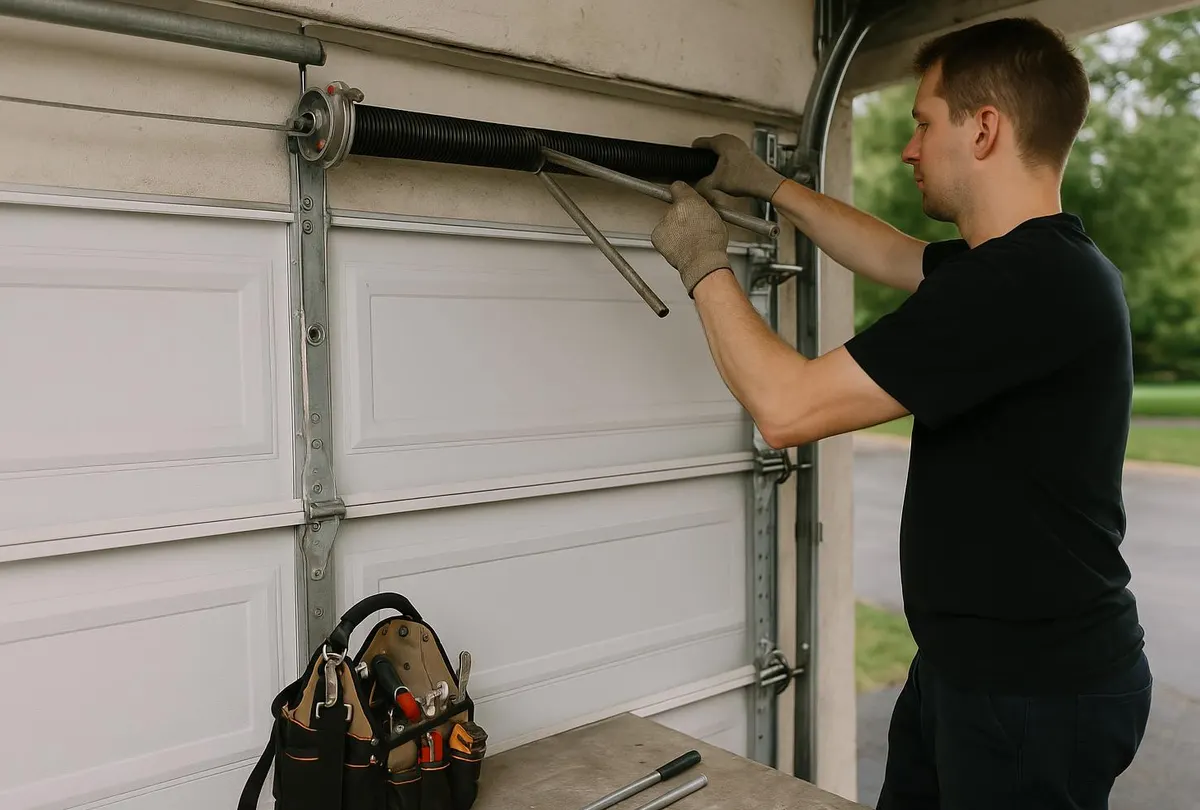
The problem is that a garage door isn't a wall that happens to roll up. It's a heavy panel system held in place by springs under serious tension, running on tracks, connected to cables and rollers that are designed to move regularly. Parking that system for months or years and hoping it stays fine is where the real cost shows up later.
Why a closed door isn't the same as a finished wall
A framed interior wall is static. A garage door is a machine that's currently turned off. Behind that painted panel sits a torsion spring (or two) storing enough force to seriously injure someone if it fails, cables that can fray, rollers that can seize in their tracks, and, if the opener stays wired in, a motor and safety sensors that degrade whether or not anyone uses them.
None of that goes away because the room on the other side now has a treadmill or a desk in it. It just goes unnoticed.
Three ways people actually convert the space
- Leave the door in place, keep it shut, do nothing else. Cheapest and fastest. The door still needs occasional lubrication, a visual spring check, and testing of the auto-reverse safety feature if the opener stays connected. Skipping this for years is how homeowners end up with a rusted spring that snaps the first time someone finally tries to open it.
- Disconnect the opener, keep the door as a manual backup. A reasonable middle ground if you want flexibility to use the garage for parking again someday. The door still needs periodic exercise — opening and closing it every month or two keeps springs and rollers from seizing.
- Remove the door and frame in a real wall or window. The most permanent option and the one that actually resolves insulation, noise, and temperature problems. It also means properly dealing with the spring system (not just unbolting it) and, in a region with earthquake retrofit requirements around garage openings, making sure whatever framing goes in doesn't compromise the bracing that was likely added to that wall.
What the coastal climate does to a door nobody touches
Encinitas and the surrounding North County coastline bring salt air that corrodes unprotected steel hardware — springs, hinges, and tracks — faster than it would inland, even if the door never moves. A sealed, unused door also traps humidity behind it, which is worse in winter rain and can lead to condensation inside the new room if the wall behind the door isn't properly vapor-sealed. Inland pockets get the opposite problem: a standard steel garage door has little to no insulation, so a converted space with the original door left in place can turn into an oven during hot inland summers and pull in dust and wildfire smoke through worn weatherstripping during the dry season.
The catch that shows up at resale
Home inspectors and buyers notice an inoperable garage door fast. If the springs haven't been touched in years, the safest assumption for any inspector is that they're compromised. A system that's been sitting loaded and neglected is far more likely to fail suddenly and violently than one that's been exercised and maintained, which is exactly the kind of liability that kills a sale or triggers a repair credit at closing.
What to actually decide before converting
- Do you want to keep the option of parking a car here again someday? If yes, keep the door operable and maintained, not just closed.
- If you're removing the door permanently, plan for proper spring decommissioning and seismic-appropriate framing, not a weekend DIY patch.
- Either way, don't let a spring sit under full tension, untouched, for years. That's the part people forget to ask about.
When to call Encinitas Garage Door
If you're keeping the door in place as a backup, we can run a full garage door maintenance check before you seal up the room — lubrication, spring tension, cable condition, and opener safety sensor testing — so it's not a surprise five years from now. If you've decided to remove the door for good, our spring replacement and removal service handles the tensioned components safely, which isn't something to unbolt on a Saturday afternoon. Either path, we'll tell you straight which one actually fits your plans for the space.
Converting your garage in Encinitas, Carlsbad, Solana Beach, or anywhere in North County? Call Encinitas Garage Door first and let us check the door before you close up the walls.